
Following a barrage of drone strikes fired by Iran on Saturday towards Israel, a New York Times report states that Israel decided to carry out a retailtory attack on Tehran on Sunday morning, however it was cancelled after a phone call took place between US President Joe Biden and Israeli Prime Minister Benjamin Netanyahu to discuss the situation.

India on Thursday night swiftly foiled Pakistan's attempts to hit various key Indian installations including military stations at Jammu, Pathankot and Udhampur with drones and missiles, the defence ministry said.

Iran's supreme leader, Ayatollah Ali Khamenei, on Wednesday warned Israel and said that the "Zionist regime made a grave mistake" and "will face the consequences of its actions".

Israel Defence Forces spokesperson Brigadier General Effie Defrin on Saturday claimed that the Israeli Air Force has achieved aerial freedom of action over Tehran, which is 'no longer immune'.

Islamabad also summoned the Iranian charge d'affaires here and issued a strongly worded condemnation of Iran's "violation of its airspace", the Foreign Office said.
At the end of the day, for many worldwide, the ongoing mutual attacks between Israel and Iran would seem a contest devoid of any moral high ground and only a bout between two ordinary adversaries, one that nevertheless risks spinning out of control into a larger conflagration, notes Shyam G Menon.

The IDF noted that the strikes are being conducted in response to "relentless attacks" from Iran and its proxies since October 7, adding that Israel has the "right and the duty to respond."

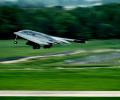
The aircraft, part of the US air force's 509th Bomb Wing, reportedly dropped 14 massive 30,000-pound bunker-buster bombs on two major underground uranium enrichment sites in Iran as part of Operation Midnight Hammer.

Trump couldn't care less anymore about the Israeli demand for Iran's 'de-nuclearisation' and 'de-militarisation.' Trump pins hopes on a grand bargain with Iran as a partner in America First, argues Ambassador M K Bhadrakumar.

'The Indian embassy did send a bus to evacuate us along with an Indian embassy official, but Urmia University is not giving us permission to leave.'

The development comes amidst officials of the foreign ministries from the two sides exchanged goodwill messages.

In a dramatic escalation of tensions, Israel launched airstrikes early Friday targeting key nuclear facilities in and around Iran's capital Tehran.

The United States, Canada and the United Nations have condemned the Iranian air attack on Israel, with President Joe Biden reaffirming America's 'ironclad commitment' to the Jewish nation and vowing to convene a meeting of the G-7 leaders on Sunday to develop a coordinated response to the brazen assault.

The crises of the 21st century, 9/11, the economic meltdown, COVID-19, Russia-Iran war and the Hamas-Israel war seem to be never ending. In this situation, Iran might be contemplating a nuclear deterrent to defend itself, observes Ambassador T P Sreenivasan, the distinguished long-time Rediff contributor who turns 80 on June 17..

The Israel-Iran conflict has entered a 'decisive phase' after the United States bombed three major Iranian nuclear sites Sunday morning, feel strategic affairs experts with some of them arguing it was Washington, DC's 'responsibility' to not get involved in the military standoff.

After his remarks at the White House. Trump, in his Truth Social pos,t warned that any retaliation from Iran would be met with "force far greater than what was witnessed tonight."

Indian carriers are grappling with severe operational disruptions after Iran launched missile strikes on the US military base in Qatar late Monday. This led to airspace closures for long hours in parts of West Asia. Iran, Qatar, the UAE, Bahrain, and Kuwait shut down their skies following the attack, forcing airlines to cancel, divert, or delay flights through these vital corridors.

Zahra said that while the university officials visited the students and advised them to remain calm, they did not offer clarity on which areas might be safer.
'With the US having entered the war, raising the risks of a wider conflict, those impacts could be even more damaging.'

The fresh incident comes amid growing global concerns over attacks on various commercial vessels in the Red Sea by the Houthi militants.

In a post on Truth Social, Trump described the operation as a historic moment for the US, Israel and the world, while urging Iran to agree to end the ongoing conflict.

Asked about the whereabouts of Iran's 400 kilograms of 60-per-cent enriched uranium, Netanyahu claimed that Israel has "interesting intel" related to the issue.

State news agency IRNA said that Iran has successfully shot down 'adversial targets' in the airspace around Tehran province. Iranian state television noted hearing six loud sounds resembling explosions in parts of the capital, with the source of the noises currently unverified.

US President Donald Trump has cut short his visit to Canada, where he was to attend G7 Summit meetings, to return to Washington, DC, a day earlier amid escalating tensions between Iran and Israel.

A day after killing of Hezbollah chief Hassan Nasrallah in an airstrike in Beirut, Israel conducted widespread strikes in Lebanon on Sunday, killing over 100 people. The Israeli Air Force (IAF) also launched airstrikes on military targets in Yemen, specifically targeting Houthi-controlled sites, including power plants and a seaport.
'But that was not our aim. Our objective was already achieved.'
In a Truth Social Post, Trump said, "This cannot continue. There will be either peace or there will be tragedy for Iran far greater than we have witnessed over the last eight days."
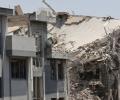
An inconclusive end to this war will pose high risk for Netanyahu of a cascading demand for a regime change in Israel, predicts Ambassador M K Bhadrakumar.

'What the Americans want is to destabilise Iran. For destabilising Iran, you need access. 'One access is through Iraq. The other access is through Pakistan.'

Saudi Arabia's Minister of State for Foreign Affairs Adel Aljubeir visited India on Thursday and held talks with External Affairs Minister S Jaishankar, focusing on de-escalating tensions between India and Pakistan. The visit comes as ties between India and Pakistan have further deteriorated following Indian military strikes on terror infrastructure in Pakistan. Iranian Foreign Minister Abbas Araghchi also arrived in New Delhi on a scheduled visit amidst the escalating tensions.
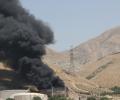
Asked about the expectations from the US, Azar said Washington and Israel are "completely in sync". He said he felt that the US would "support" Israel's action.

The IDF said that its target was the Hezbollah commander, who was responsible for the attack at the football ground in Majdal Shams.
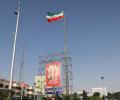
The post came as the conflict between Israel and Iran intensified as they traded strikes on a fifth day.
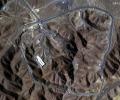
United States President Donald Trump has stated that Iran will 'never be able to rebuild' its nuclear facilities following recent American airstrikes carried out under 'Operation Midnight Hammer' over the weekend while claiming that the sites were now 'under rock', referring to Iran's nuclear facilities at Fordow, Natanz, and Esfahan.
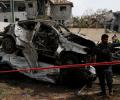
Applauding United States President Donald Trump's 'bold decision' to hit Iran's nuclear facilities, Israeli Prime Minister Benjamin Netanyahu on Sunday said that it demonstrated 'peace through strength' and will lead to a future of peace and prosperity in the region and beyond.

Khamenei, who has the last word on all state matters and is also the commander in chief of the armed forces, instructed military commanders from the Revolutionary Guards and the army to prepare plans for both an attack and a defence in case the war expands and Israel or the US strike Iran, the officials said.

United States President Donald Trump on Tuesday said 'we' now have 'complete and total control of the skies over Iran' and 'we know exactly where the so-called 'Supreme Leader' is hiding'.
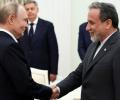
Will Russia's entry deter Trump on his warpath?, asks Ambassador M K Bhadrakumar.
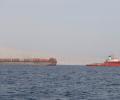
US strikes on Iran's three main nuclear facilities have once again raised concerns that Tehran might shut down the Strait of Hormuz - one of the world's most critical chokepoints, through which a fifth of global oil and gas supply flows.
Indian refiners are likely to import 2-2.2 million barrels per day of Russian crude oil in June - the highest in the last two years and more than the total volumes bought from Iraq, Saudi Arabia, the UAE and Kuwait, preliminary data by global trade analytics firm Kpler showed.
 © 2026 Rediff.com - Advertise with us - Disclaimer - Privacy Policy - Sitemap - Feedback - About us - Terms of use - Grievances